
What Indiana Law Requires You to Carry
Indiana law requires every registered vehicle to carry liability insurance with minimum limits of $25,000 per person for bodily injury, $50,000 per accident for bodily injury, and $25,000 per accident for property damage. These minimums apply whether you own one car or five. Each vehicle on your policy must meet these thresholds before the Indiana Bureau of Motor Vehicles will issue or renew registration.
The state does not require personal injury protection or uninsured motorist coverage. That structural reality leaves a gap: if an uninsured driver hits you, your own liability policy pays nothing for your injuries or vehicle damage. Households with multiple vehicles face this gap across every car they register, and filling it is a deliberate choice rather than a legal mandate.
Compare car insurance rates in your state
Get quotes from licensed carriers — no obligation, no spam, results in minutes.
Get Your Free QuoteIndiana Liability Minimums
$25,000 / $50,000 / $25,000
Indiana Code sets bodily injury liability at $25,000 per person and $50,000 per accident, with $25,000 for property damage. These are the lowest limits you can carry and remain legal.
Indiana Bureau of Motor Vehicles
How the Minimum Limits Work Across Multiple Vehicles
Every vehicle titled and registered in Indiana must carry the state minimums. When you insure two or more cars on one policy, the liability limits apply per accident, not per vehicle. A single accident involving one of your cars triggers the same $25,000/$50,000/$25,000 limits whether you own two vehicles or six.
Carriers do not stack liability limits across vehicles. If you cause an accident that injures three people and totals another driver's car, your policy pays up to $50,000 for all bodily injuries combined and $25,000 for all property damage combined. The fact that you insure multiple vehicles does not increase those per-accident caps.
This structure matters when you add a third or fourth vehicle to an existing policy. The new car must meet the state minimums, but adding it does not raise your per-accident liability protection. Households with several drivers and several cars face the same liability ceiling in any single accident as a household with one car.
Indiana's minimums protect other people you injure. They do not cover your own injuries, your own vehicle, or damage caused by an uninsured driver who hits you.
What the State Minimums Do Not Cover
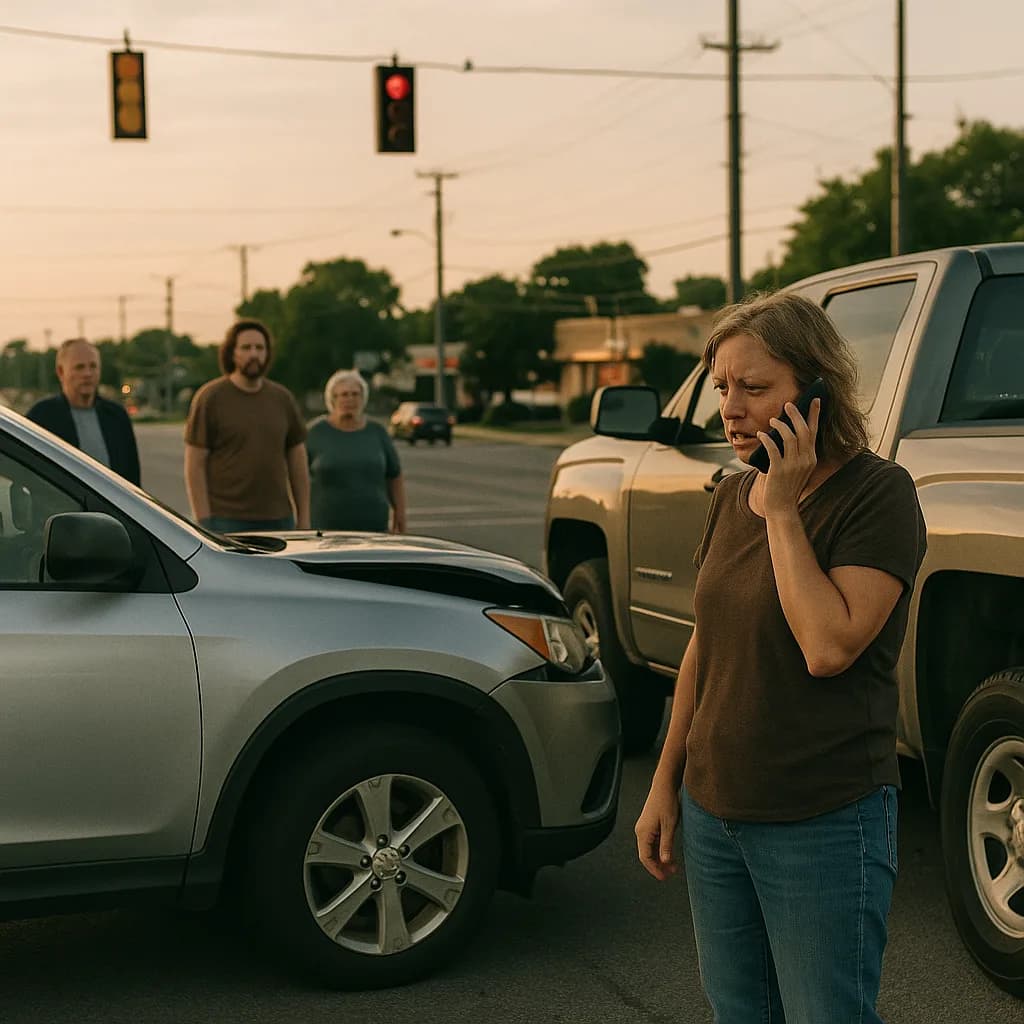
Liability insurance pays for injuries and property damage you cause to others. It does not pay to repair or replace your own vehicle after an accident, regardless of fault. If you finance or lease any of your vehicles, the lender requires collision and comprehensive coverage to protect their interest. The state does not require these coverages, but the lienholder does, and that requirement applies to every financed vehicle on your policy.
Indiana does not mandate uninsured or underinsured motorist coverage. Fourteen percent of Indiana drivers carry no insurance. If an uninsured driver hits one of your vehicles, your liability policy pays nothing for your injuries or vehicle damage. Uninsured motorist coverage is optional, and you must add it deliberately to every vehicle you want protected. Households with multiple cars face this exposure across every vehicle they register.
Related Articles






Proof of Insurance and Registration
Indiana requires proof of insurance at registration and renewal. The Bureau of Motor Vehicles verifies coverage electronically through the Indiana Financial Responsibility System. Carriers report policy issuance, cancellation, and lapse directly to the BMV. You do not submit paper proof unless the electronic verification fails.
When you add a vehicle to an existing policy, your carrier reports the new coverage to the BMV within days. The registration process waits for that electronic confirmation. If you buy a car and attempt to register it before your carrier files the coverage update, the BMV rejects the registration. Most carriers file updates within one business day, but the timing varies. Confirm your carrier has filed before you visit the BMV branch.
If your policy lapses or cancels, the carrier notifies the BMV within five days. The BMV suspends your registration and your driving privileges immediately. Households with multiple vehicles face suspension across every registered car if one policy lapses.
Indiana Reinstatement Fee
Processing takes ten business days after the fee is paid and proof of current insurance is filed.
Indiana Bureau of Motor Vehicles
SR-22 Filing When Required
Indiana requires an SR-22 certificate for certain violations: conviction of court-related offenses or insurance violations that result in suspension. The SR-22 is not insurance. It is a form your carrier files with the BMV certifying you carry at least the state minimum liability limits. The filing period lasts five years from the conviction date.
Not every carrier files SR-22 certificates. Of the carriers writing in Indiana, Acceptance Insurance, Allstate, American Family, Bristol West, Dairyland, Elephant, Farmers, GAINSCO, Geico, National General, Progressive, Root, State Farm, The General, and USAA file SR-22 forms. If your current carrier does not file SR-22 certificates, you must switch carriers to meet the BMV requirement. The SR-22 filing applies to you as a driver, not to a specific vehicle, but you must maintain continuous coverage on at least one vehicle throughout the five-year period.
Compare Carriers That Write Multiple Vehicles in Indiana
Forty-one carriers write auto insurance in Indiana. Not all of them offer multi-car discounts, and not all of them write households with several vehicles at competitive rates. Carriers that specialize in standard or preferred risk—Amica, Auto-Owners, Erie, State Farm, USAA—typically offer the largest multi-car discounts but may decline households with any high-risk driver. Carriers that write non-standard risk—Acceptance, Bristol West, Dairyland, GAINSCO, The General—accept drivers with violations or lapses but may not discount as aggressively for multiple vehicles.
When you compare carriers, confirm each one writes all the vehicles in your household and offers a multi-car discount that applies when every vehicle sits on the same policy. Some carriers require every vehicle to be garaged at the same address. Others allow vehicles garaged at different addresses within the same county. The specific rules vary by carrier, and the difference affects whether a household with vehicles at two addresses qualifies for the discount. Compare at least three carriers that write your household's vehicle count and driver profile before you commit.