
Average Car Insurance Premium — Indiana
Free to compare
What Indiana's Average Actually Measures
You found Indiana's published average annual auto insurance expenditure — $1,153.05 per insured vehicle as of 2023 — and you're trying to map it to your household's two-car or three-car policy. The figure exists, but it measures something different from what you're paying. That average reflects expenditure per vehicle across all policy types statewide, including single-car policies, commercial fleets, and households with vastly different coverage selections and driver profiles. It does not isolate multi-vehicle household policies, and it does not account for the multi-car discount that reshapes your premium when every vehicle sits on the same policy.
Your household's actual cost depends on whether you're carrying state minimum liability only or full coverage, how many vehicles share the policy, whether all drivers and cars qualify for the same-policy discount, and which carrier writes your coverage. The statewide average is a starting reference, not a quote. Understanding what drives the gap between that figure and your household's premium requires looking at how multi-car policies are priced and what the state requires you to carry.
“The statewide average blends single-car policies, commercial fleets, and multi-vehicle households — it does not isolate what your two or three cars should cost on one policy.”

Meet Indiana's Requirements Without Overpaying
Get My Indiana Car Insurance Quote$1,153.05
Indiana Annual Expenditure Per Vehicle
This figure represents the average annual auto insurance expenditure per insured vehicle across all policy types in Indiana as of 2023. It includes single-vehicle policies, commercial coverage, and households with varying coverage levels, so it does not isolate the cost structure of a multi-car household policy.
NAIC Auto Insurance Database Report 2023
How Multi-Car Policies Change the Cost Structure
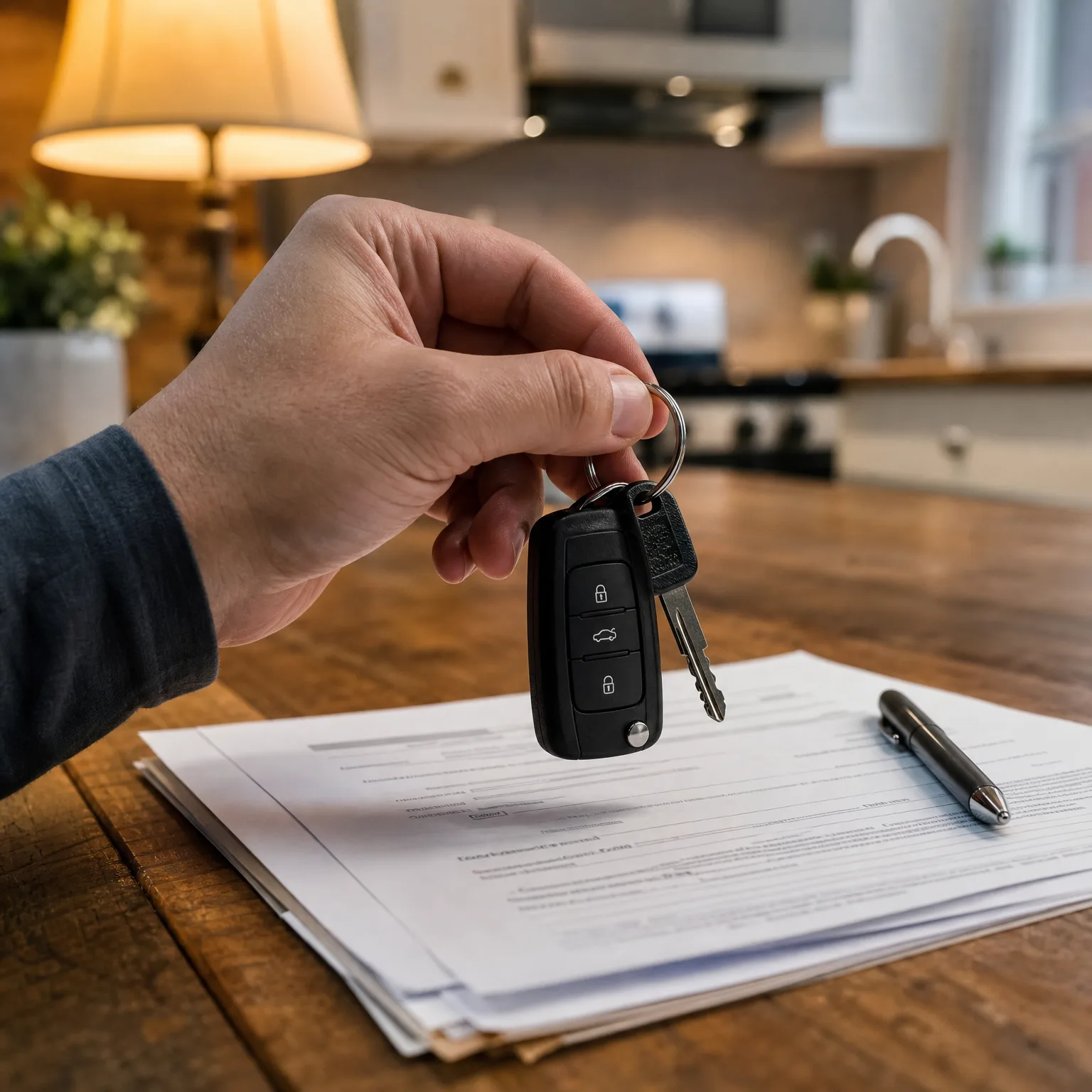
A multi-car policy bundles two or more vehicles under one policy number, and most carriers apply a multi-vehicle discount when you do. The discount typically reduces the per-vehicle premium because the carrier writes one policy instead of two, processes one renewal instead of two, and assumes you're a stable long-term customer if you're insuring multiple cars with them. The discount applies to the policy as a whole, not to each vehicle individually, and it requires every vehicle to sit on the same policy and usually to share a garaging address.
The statewide average expenditure per vehicle does not separate households that receive this discount from those that don't. If you're insuring two cars on one policy and receiving the multi-vehicle discount, your per-vehicle cost will typically fall below the statewide average. If you're insuring two cars on separate policies — because they're titled to different household members, garaged at different addresses, or written by different carriers — you lose the discount and your combined cost rises above what the average suggests.
Adding a third or fourth vehicle to an existing multi-car policy re-rates the entire policy rather than simply adding a flat per-vehicle amount. The carrier recalculates your premium based on the new vehicle count, the garaging location, the drivers assigned to each car, and the coverage selections across all vehicles. This means your total premium can jump or drop in ways the per-vehicle average does not predict.

The multi-vehicle discount requires every car on the same policy, usually garaged at the same address. Split policies lose the discount even when the household owns multiple vehicles.






How Carriers Price Multi-Car Households Differently
Carriers writing multi-car policies in Indiana vary widely in how they calculate the multi-vehicle discount, how they assign drivers to vehicles, and how they rate households with mixed driver profiles. Some carriers offer a larger discount when you add a third vehicle; others cap the discount at two cars. Some carriers allow you to assign a primary driver to each vehicle and rate each car individually; others rate the household as a unit and assign the highest-risk driver to every vehicle for pricing purposes.
If your household includes a teen driver, a driver with a recent violation, or a driver with a suspended license, the way the carrier assigns that driver to your vehicles determines whether your premium spikes across all cars or concentrates on one. A carrier that assigns the teen only to the car they drive will produce a lower total premium than a carrier that rates the teen as a potential driver of every vehicle on the policy. The statewide average does not capture this variation, and neither does any single-carrier quote.
The carrier roster in Indiana includes 27 insurers writing auto coverage, ranging from preferred-tier carriers like State Farm, Allstate, and USAA to non-standard carriers like The General, Bristol West, and Dairyland. Preferred-tier carriers typically offer the largest multi-vehicle discounts but require clean driving records and good credit. Non-standard carriers write households with violations, suspended licenses, or poor credit but charge higher base rates and offer smaller discounts. Your household's position in that spectrum determines which carriers will write your policy and what discount structure you qualify for.
27 carriers
Auto Insurers Writing Indiana Coverage
Indiana's auto insurance market includes 27 carriers writing coverage statewide, spanning preferred-tier, standard, and non-standard risk pools. Multi-vehicle discount structures, driver-assignment rules, and base-rate positioning vary significantly across this roster.

When Your Household Premium Exceeds the Average
Your household's multi-car premium will exceed the statewide average when you carry full coverage on financed vehicles, when your household includes a high-risk driver, when your vehicles are garaged in a high-theft or high-claim-density ZIP code, or when your carrier does not offer a competitive multi-vehicle discount. A household insuring two financed SUVs with full coverage in Indianapolis, with a teen driver on the policy, can easily pay double the statewide per-vehicle average. That outcome does not mean you are overpaying — it means your risk profile and coverage selections differ from the blended average.
If your premium feels high relative to the average, the first check is whether you are receiving the multi-vehicle discount. If your vehicles sit on separate policies, combining them onto one policy with a carrier that writes multi-car households can cut your total cost significantly. If your vehicles already share one policy and your premium still exceeds the average, compare carriers.
Compare Carriers That Write Your Household Structure
The statewide average is a benchmark, not a target. Your household's actual cost depends on the number of vehicles you insure, the coverage you carry on each, the drivers assigned to your policy, and the carrier writing your coverage. The gap between the average and your premium narrows when you compare carriers that specialize in multi-car households and apply the multi-vehicle discount consistently. Carriers in Indiana's roster vary widely in how they price households with two, three, or four vehicles, and the only way to find the lowest total premium for your specific structure is to compare quotes from multiple insurers that write your profile. Start with carriers that confirm they write multi-vehicle policies in Indiana and ask each how they calculate the multi-vehicle discount and assign drivers to vehicles.
What Indiana Requires You to Carry
Indiana requires $25,000 bodily injury liability per person, $50,000 bodily injury liability per accident, and $25,000 property damage liability per accident. These minimums apply to every vehicle on your policy. The state does not mandate personal injury protection or uninsured motorist coverage, so those coverages are optional. If you finance or lease any vehicle, your lender will require collision and comprehensive coverage on that car, which raises your premium significantly above the state minimum.
A household carrying only the state minimums on two older vehicles will pay far less than the statewide average. A household carrying full coverage — liability, collision, comprehensive, and uninsured motorist — on two financed vehicles will pay well above it.
Get Your Free Quote
Get My Indiana Car Insurance QuoteFrequently Asked Questions
What is the average car insurance cost in Indiana for two cars?
Indiana's average annual expenditure is $1,153.05 per insured vehicle as of 2023, but that figure blends all policy types statewide. A household insuring two cars on one policy with the multi-vehicle discount will typically pay less per vehicle than the statewide average, while a household carrying full coverage on financed vehicles or insuring a high-risk driver will pay more. Your actual cost depends on coverage selections, driver profiles, and which carrier writes your policy.
How much does the multi-car discount save in Indiana?
The multi-vehicle discount structure varies by carrier and is not published as a fixed percentage. Most carriers reduce the per-vehicle premium when you insure two or more cars on the same policy, but the size of the discount depends on the carrier's pricing model, your household's driver profile, and the number of vehicles you add. Compare quotes from multiple carriers to see the actual dollar difference the discount produces for your household.
Why is my Indiana car insurance higher than the state average?
Your premium exceeds the statewide average when you carry full coverage on financed vehicles, insure a high-risk driver, garage your cars in a high-claim ZIP code, or use a carrier that does not offer a competitive multi-vehicle discount. If your household's risk profile or coverage selections differ from that blend, your cost will differ from the average.
Do I need full coverage on both cars in Indiana?
Indiana requires only liability coverage — $25,000 bodily injury per person, $50,000 per accident, and $25,000 property damage. Full coverage (collision and comprehensive) is optional unless you finance or lease a vehicle, in which case your lender will require it on that car. You can carry full coverage on one vehicle and liability-only on another if the second car is owned outright and you are willing to pay out of pocket for damage to it.
Can I insure two cars with different carriers in Indiana?
You can insure two cars with different carriers, but doing so forfeits the multi-vehicle discount that most carriers offer when both vehicles sit on the same policy. Splitting your cars across two carriers typically raises your combined premium unless one carrier refuses to write one of your vehicles or one driver on your household has a profile that makes a separate policy cheaper. Compare the combined cost of two separate policies against one multi-car policy before splitting coverage.
How does adding a third car change my Indiana insurance cost?
Adding a third vehicle to your existing multi-car policy re-rates the entire policy rather than adding a flat per-vehicle amount. The carrier recalculates your premium based on the new vehicle count, the drivers assigned to each car, and the coverage selections across all three vehicles. Some carriers increase the multi-vehicle discount when you add a third car; others cap the discount at two vehicles. Request a quote for the three-car policy before adding the vehicle to see the actual cost change.