
How to Find Cheap Car Insurance — Indiana
Free to compare
The Multi-Car Discount Requires One Shared Policy
You own two or more vehicles, you're paying separate premiums, and you've heard the multi-car discount cuts costs. The discount exists — most carriers writing in Indiana offer it — but it applies only when every vehicle you want covered sits on the same policy. A car titled to your spouse on a separate policy does not count. A vehicle garaged at your college student's apartment in another city may not count. The discount is not automatic; it is conditional on policy structure.
Indiana does not mandate the multi-car discount. Carriers set their own eligibility rules. The most common requirement: every vehicle must be listed on one policy, and in many cases every vehicle must share the same garaging address. If your household's vehicles are split across two policies or two addresses, you may not qualify — even if you own both cars and live in the same house.
“The multi-car discount applies only when every vehicle sits on the same policy — a car titled to a household member on a different policy does not count.”

Meet Indiana's Requirements Without Overpaying
Get My Indiana Car Insurance Quote14%
Indiana Uninsured Motorist Rate
Fourteen percent of Indiana motorists drive without insurance. Carriers price multi-vehicle policies knowing one uninsured driver can wipe out the savings from bundling two cars. The uninsured-motorist rate is one reason carriers tighten multi-car discount eligibility.
NAIC 2023
What Indiana Requires for Every Vehicle You Insure
Indiana requires minimum liability coverage of $25,000 per person for bodily injury, $50,000 per accident for bodily injury, and $25,000 for property damage. Every vehicle you register must carry at least these limits. The state does not require personal injury protection or uninsured motorist coverage, but carriers often include uninsured motorist as a default add-on unless you decline it in writing.
When you add a second or third vehicle to your policy, the carrier re-rates the entire policy. The multi-car discount applies to the combined premium, but the base rate reflects every vehicle's make, model, year, garaging ZIP code, and primary driver. A high-value vehicle or a car garaged in a high-theft county can raise the base rate enough that the discount does not fully offset the increase.
Indiana does not cap the number of vehicles one policy can carry. You can insure four, five, or more cars on a single policy if the carrier accepts the risk. Carriers writing non-standard or high-risk policies may limit the number of vehicles per household or require separate policies for vehicles driven by excluded drivers.

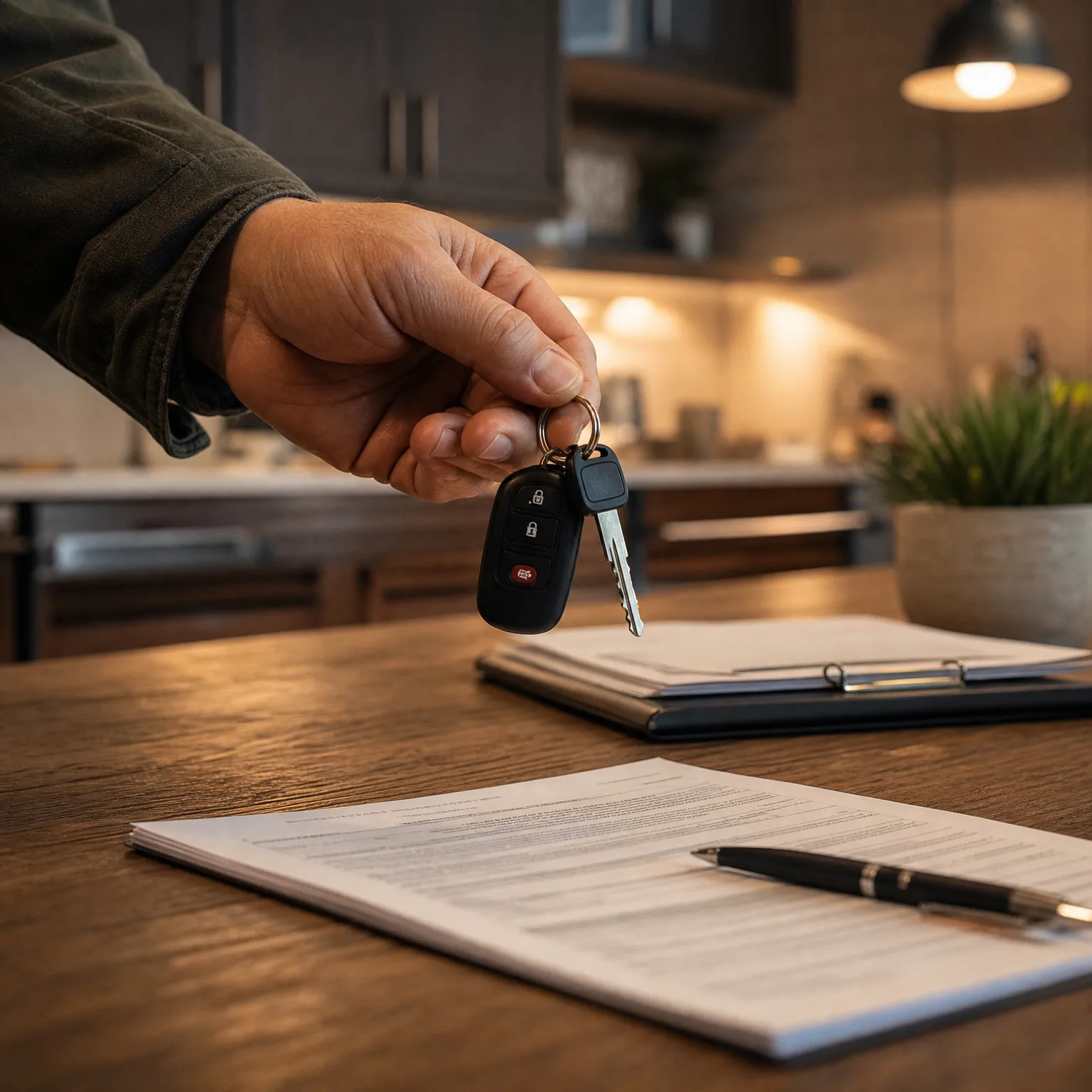
The multi-car discount disappears the moment you move one vehicle to a separate policy, even if both policies are with the same carrier.






When Separate Policies Cost Less Than One Combined Policy
A combined policy is not always cheaper. If one vehicle is high-risk — a sports car, a vehicle driven by a driver with a recent violation, or a car garaged in a high-theft ZIP — the base rate for the combined policy may rise enough that the multi-car discount does not offset it. In that case, isolating the high-risk vehicle on a separate policy with a non-standard carrier and keeping the other vehicles on a preferred-tier policy can produce a lower total premium.
Indiana does not require you to use the same carrier for every vehicle you own. You can insure one car with a non-standard carrier and another with a standard carrier. The trade-off: you lose the multi-car discount, you manage two policies, and you pay two sets of fees. The decision depends on the rate difference between the combined and separate structures.
Carriers writing non-standard auto in Indiana include Bristol West, Dairyland, The General, and National General. These carriers accept drivers with violations, lapses, or suspended licenses, but their base rates are higher than standard-tier carriers. If the high-risk vehicle's premium on a non-standard policy is lower than the increase it causes on a combined standard-tier policy, the separate-policy structure wins.
$25,000 / $50,000 / $25,000
Indiana Minimum Liability Limits
Every vehicle registered in Indiana must carry at least $25,000 per person for bodily injury, $50,000 per accident, and $25,000 for property damage. These are the floor, not a recommendation. A multi-car household with higher asset exposure should consider higher limits to protect against a claim that exceeds state minimums.
Indiana Bureau of Motor Vehicles
How Adding a Vehicle Mid-Term Affects Your Premium
When you add a vehicle to an existing policy, the carrier re-rates the entire policy immediately, not at renewal. The new premium reflects the added vehicle's make, model, year, garaging address, and primary driver, plus the multi-car discount applied to the updated vehicle count. The change is prorated from the date you add the vehicle to the end of the current term.
Indiana carriers typically give you a grace period — often 14 to 30 days — to report a newly purchased or titled vehicle and add it to your policy. During that window, your existing policy may extend liability and sometimes physical-damage coverage to the new vehicle, but only if you already carry those coverages on another vehicle. If you miss the window and do not report the vehicle, the carrier can deny a claim on the unreported car.
Compare Carriers That Write Multi-Vehicle Policies in Indiana
Twenty-eight carriers write auto insurance in Indiana, but not all offer the same multi-car discount or accept the same household structures. State Farm, Geico, Progressive, Allstate, and Nationwide all write multi-vehicle policies statewide and offer online quotes. Carriers writing non-standard auto — Bristol West, Dairyland, The General — accept higher-risk households but charge higher base rates. The carrier that offers the lowest premium for one vehicle may not offer the lowest premium for three.
The only way to know which carrier offers the lowest combined premium for your household is to quote the same coverage structure with multiple carriers. Indiana does not regulate how carriers calculate the multi-car discount, so the discount percentage and the base rate both vary. A smaller discount on a lower base rate can beat a larger discount on a higher one. Compare the final premium, not the discount percentage.
Structuring Coverage Across Two or More Vehicles
Combining vehicles on one policy triggers the multi-car discount and simplifies billing, but it also means one claim can affect the premium for every vehicle on the policy. If your teenager drives one car and you drive another, a claim on the teen's vehicle re-rates the entire policy at renewal. Some households keep a high-risk vehicle on a separate policy to isolate the rate impact, even though it costs more upfront.
Carriers writing in Indiana vary in how they structure multi-vehicle policies. State Farm, Progressive, and Geico all write multi-car policies statewide, but their discount structures differ. State Farm applies the discount as a percentage off the combined premium; Progressive applies it per vehicle. The carrier roster in Indiana includes 28 carriers writing auto coverage, but not all offer the same multi-car discount or accept the same household structures.
Get Your Free Quote
Get My Indiana Car Insurance QuoteFrequently Asked Questions
Does Indiana require the same insurance on every vehicle I own?
Indiana requires every registered vehicle to carry at least $25,000/$50,000/$25,000 liability coverage. You can carry higher limits or add collision and comprehensive on some vehicles and not others, but every car must meet the state minimum. The coverage does not have to be identical across vehicles.
Can I insure two cars on one policy if they are garaged at different addresses?
Most carriers require every vehicle on a multi-car policy to share the same garaging address. If one car is garaged at your home and another at a college student's apartment in a different city, the carrier may require separate policies or deny the multi-car discount. Check with the carrier before assuming both vehicles qualify.
How much does the multi-car discount save in Indiana?
The discount percentage varies by carrier and is not regulated by the state. The final premium depends on the base rate for your vehicles, drivers, and garaging addresses, plus the discount applied to the combined policy. Compare total premiums from multiple carriers rather than focusing on the discount percentage alone.
What happens if I remove one vehicle from a multi-car policy?
Removing a vehicle from a multi-car policy triggers an immediate re-rating of the remaining vehicles. The multi-car discount still applies if you have two or more vehicles left on the policy, but the premium adjusts to reflect the new vehicle count. If you drop to one vehicle, the discount disappears entirely.
Can I get the multi-car discount if one vehicle is financed and one is paid off?
Yes. The multi-car discount applies to the number of vehicles on the policy, not their financing status. A financed vehicle requires collision and comprehensive coverage to satisfy the lender, but that does not affect your eligibility for the multi-car discount as long as both vehicles are on the same policy.
Do I need to list every household member as a driver on a multi-car policy?
Indiana carriers require you to list every licensed household member on the policy or formally exclude them. An unlisted driver who lives in your household and drives one of your vehicles can trigger a claim denial. If a household member does not drive your vehicles, ask the carrier about a named-driver exclusion.